Product Description
Quick Specifications
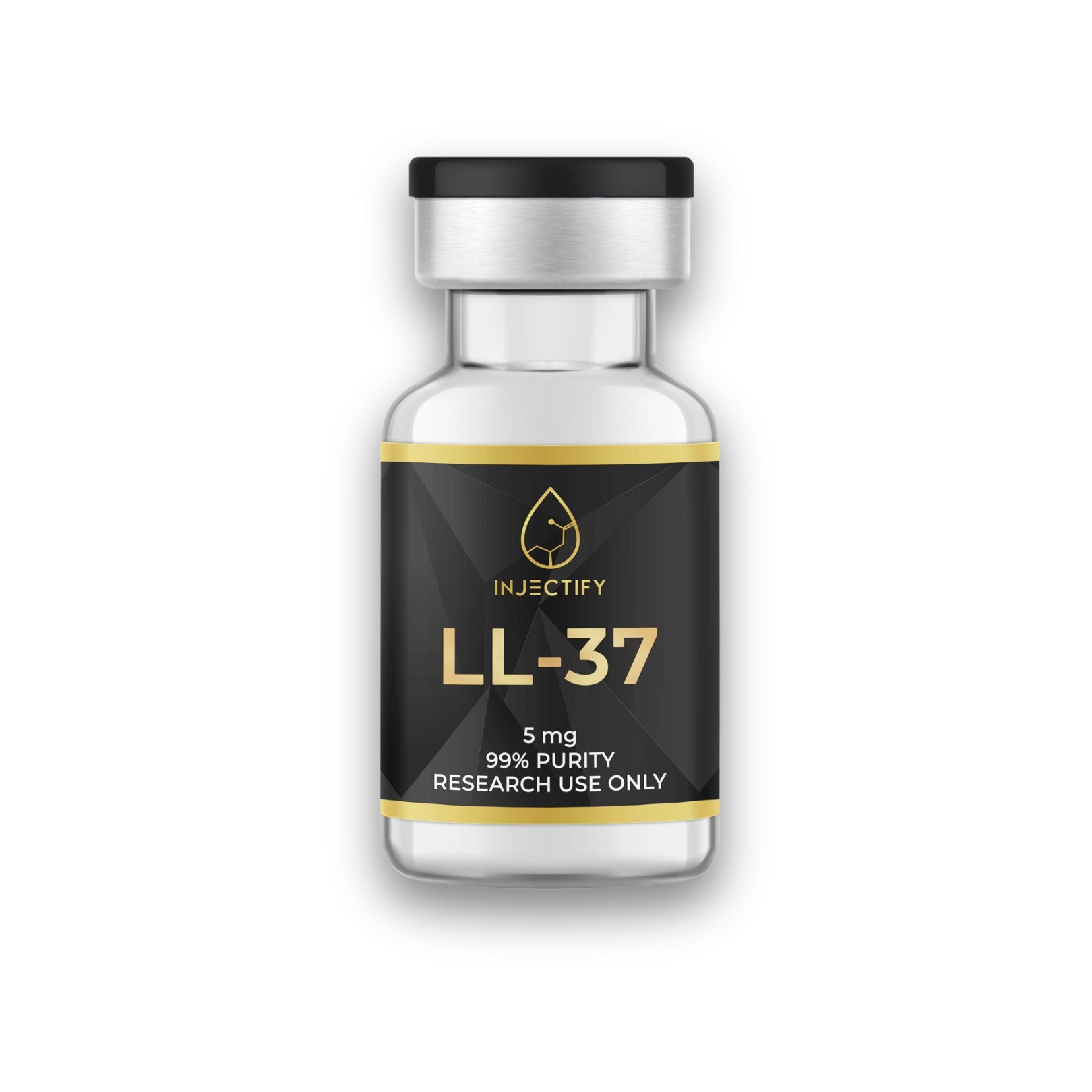
Content: 5 mg LL-37 per vial
Form: Sterile lyophilized powder in 3 mL glass vial
Sequence: Leu-Leu-Gly-Asp-Phe-Phe-Arg-Lys-Ser-Lys-Glu-Lys-Ile-Gly-Lys-Glu-Phe-Lys-Arg-Ile-Val-Gln-Arg-Ile-Lys-Asp-Phe-Leu-Arg-Asn-Leu-Val-Pro-Arg-Thr-Glu-Ser
Molecular Formula: C₂₀₅H₃₄₀N₆₀O₅₃
Molecular Weight: 4493.342 g/mol
CAS Number: 154947-66-7
Alternative Names: CAP-18, Cathelicidin, antibacterial peptide LL-37
Purity: >99%
Research Applications & Mechanisms
LL-37 is the only human cathelicidin and represents a critical component of the innate immune system. Found primarily in white blood cells, this antimicrobial peptide demonstrates remarkable versatility in fighting infections while modulating immune responses and promoting tissue healing.
Antimicrobial Research Applications LL-37 shows powerful activity against both gram-negative and gram-positive bacteria through multiple mechanisms. It binds to bacterial lipopolysaccharide (LPS), disrupting cell membrane integrity in gram-negative bacteria. For gram-positive infections, LL-37 enhances lysozyme activity, making it effective against Staphylococcus aureus and other resistant pathogens.
Normal skin contains low LL-37 levels, but the peptide accumulates rapidly when pathogens invade. This rapid response makes LL-37 valuable for studying natural infection defense mechanisms and developing new antimicrobial treatments.
Immune System Modulation LL-37 acts as an immune system balancer rather than simply boosting or suppressing responses. T-cells increase inflammatory activity when exposed to LL-37 while inactive, but decrease inflammation when already activated. This homeostatic effect helps prevent immune system overreaction during infections.
Research shows LL-37 decreases cell death in skin cells, increases interferon-alpha production, and modulates immune cell movement. It also reduces signaling through toll-like receptor 4 while increasing IL-18 production, creating balanced immune responses.
Autoimmune Disease Research High LL-37 levels appear in autoimmune conditions like psoriasis, lupus, and rheumatoid arthritis. Rather than causing inflammation, evidence suggests elevated LL-37 may actually prevent more severe inflammatory damage. Animals lacking LL-37 show similar disease progression to those with normal levels, supporting LL-37’s protective role.
Studies in arthritis models show LL-37 derivatives protect against collagen damage and reduce disease severity when injected into affected joints. The peptide also regulates inflammation caused by interleukin-32, a key molecule in arthritis severity.
Wound Healing & Tissue Repair LL-37 promotes wound healing through multiple mechanisms. It attracts epithelial cells to injury sites, reduces programmed cell death, and stimulates blood vessel growth. In lung tissue, LL-37 promotes cell growth and wound closure while attracting healing cells to damaged areas.
The peptide works with human beta-defensin 2 to maintain tissue barriers and reduce inflammation-related cell death. This combination approach makes LL-37 valuable for studying complex healing processes.
Respiratory Disease Research LL-37 shows promise for treating lung conditions caused by inhaled toxins. When harmful particles like LPS enter the lungs, normal tissue responds by producing LL-37. Research explores using inhaled LL-37 to treat toxic dust syndrome and related respiratory diseases.
The peptide’s ability to promote lung cell growth and attract healing cells makes it valuable for studying asthma, COPD, and other chronic lung conditions.
Cancer Research Applications LL-37 shows mixed effects in cancer research, with beneficial results in intestinal and gastric cancers. The peptide appears to work through vitamin D-dependent pathways, potentially explaining vitamin D’s protective effects against digestive cancers. LL-37 activates tumor-fighting immune cells in the presence of vitamin D.
Blood Vessel Formation Studies LL-37 triggers prostaglandin E2 production in blood vessel cells, promoting angiogenesis (new blood vessel growth). This dual-edged process helps healing and heart health but can also support tumor growth. LL-37 provides a valuable tool for studying when blood vessel growth helps or harms health.
Intestinal Health Research In digestive tract studies, LL-37 increases cell migration needed for maintaining intestinal barriers and reduces inflammation-related cell death. It may serve as an alternative to TNF-alpha inhibitors, which carry serious infection risks. LL-37 could help reduce reliance on these drugs while improving outcomes in inflammatory bowel diseases.
Reconstitution & Storage Mix with bacteriostatic water. Once mixed, keep at 2-8°C and use within 30-60 days. Protect from light.
For Research Purposes Only This product is for laboratory research only by qualified scientists. Not for human use, medical treatment, or veterinary applications. Follow all safety protocols.
Related products


Injectable steroids

Injectable steroids